Chocolate Ice Cream: A Typeface That Tastes as Good as It Looks
There are fonts that are purely functional, and then there are typefaces that tell a story. Imagine the rich, velvety swirl of chocolate soft-serve, the satisfying drip of dark syrup, and the crunch of a wafer cone. Now, imagine capturing that entire sensory experience in a single word. That is exactly what the Chocolate Ice Cream color font achieves. It is more than just a set of letters; it is an intricate, visual narrative that brings the joy of a beloved dessert to your digital canvas. For designers, brand strategists, and creative entrepreneurs, this typeface offers a unique opportunity to inject immediate personality and warmth into any project.
More Than a Font: A Visual Experience
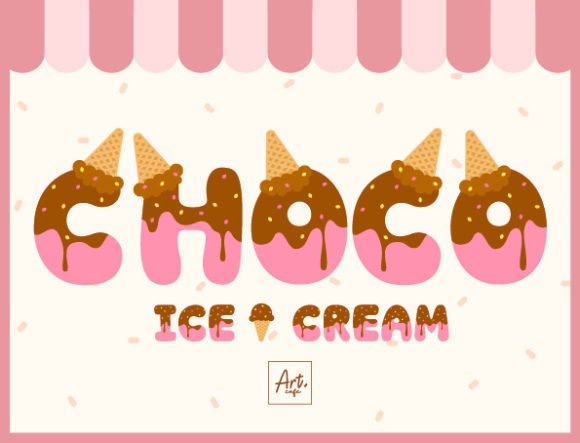
What sets this typeface apart in a crowded market of design assets is its treatment as a premium font with built-in artistry. Unlike standard serif or sans serif options, Chocolate Ice Cream is a color font—a modern typography innovation that allows for multi-colored, textured, and even illustrative letterforms directly within the font file. Each character is painted with a palette that mimics the real thing: creamy browns, glossy chocolate highlights, and accents that suggest sprinkles or cone texture. This isn't a flat design; it has depth and dimension that can make headlines pop off the page.
This visual richness makes it an exceptional display font. Its primary strength lies in its ability to act as a focal point. While you wouldn't use it for body text, its role as a headline or logo element is unparalleled for specific niches. Think of it as a piece of graphic art that happens to be readable. The craftsmanship involved turns every word into a mini-illustration, making it a powerful tool for brand identity where evoking a specific, playful, and appetizing mood is key.
Practical Applications for Your Sweetest Projects
Understanding where to deploy such a distinctive creative font is crucial for maximizing its impact. Its personality is inherently joyful, indulgent, and nostalgic, which opens up a world of practical applications across both digital and physical mediums.
- Branding & Logo Design: For bakeries, ice cream parlors, dessert food trucks, or specialty candy shops, this font can become the cornerstone of a logo design. It instantly communicates the product offering and the atmosphere—fun, homemade, and delicious. Paired with a simple script font or a clean handwritten font for secondary text, it creates a balanced and memorable brand mark.
- Packaging Design: Imagine this typeface on a box of gourmet brownies, a bag of artisanal marshmallows, or a label for hot cocoa mix. It elevates packaging design from merely informative to an experiential part of the product, enticing customers at the point of sale.
- Social Media & Web Graphics: In the fast-scrolling environment of Instagram, Pinterest, or TikTok, a post needs to grab attention instantly. Using Chocolate Ice Cream for headlines in social media graphics, story announcements, or promotional banners can significantly boost engagement. It’s perfect for highlighting a "New Flavor" or a "Weekend Special."
- Print & Merchandise: The applications extend to physical marketing assets. Think event posters for a summer festival, flyers for a bake sale, or even merchandise like t-shirts, mugs, and tote bags for a food-themed brand. Its bold character ensures it remains impactful even when scaled.
- Invitations & Editorial Layouts: Planning a dessert-themed birthday party, a bridal shower with a sweets table, or a children's event? This font adds a layer of whimsy to invitations. In editorial design, it can be used for pull quotes or section headers in a food magazine to break up content and add visual interest.
- Digital Products: Creators selling planners, recipe e-books, or printable wall art can use this typeface to create themed sets that feel cohesive and professionally designed, adding value to their digital products.
Integrating Chocolate Ice Cream Into Your Design Workflow
Adopting a display font with such a strong personality requires a thoughtful approach to ensure it enhances rather than overwhelms your project. Here’s how to work with it effectively.
Mastering Font Pairing: The golden rule with a decorative typeface is contrast. Avoid pairing it with another ornate script font or a similarly bold serif font. Instead, let it shine against a neutral backdrop. A clean, geometric sans serif font like Montserrat, Lato, or Open Sans for body text and supporting information creates a perfect hierarchy. This contrast ensures readability while making the headline font the undisputed star. For a more organic feel, a simple, legible handwritten font can work for subheadings.
Context is Everything: Always consider your audience and project goals. This typeface is a fantastic fit for brands targeting families, young adults, or anyone with a sweet tooth. It conveys approachability and fun. However, it would likely feel out of place on a corporate law firm's website or a luxury watch brand's brochure. Matching typography to project goals means aligning the font's personality with the brand's voice.
Readability and Scale: As a detailed, textured font, it performs best at larger sizes. Use it for headlines, logos, or short call-to-action phrases. Avoid setting entire paragraphs in it, as the intricate details can become visually noisy and reduce readability at small sizes or in long blocks of text. Always test your designs at the intended viewing size, whether on a mobile screen or a printed poster.
Key Considerations Before You Download
Before incorporating any new design asset into your toolkit, a few practical checks are necessary. First, explore the full character set and any included font styles. Some color fonts come with alternate glyphs or different versions (like a plain vector version for single-color applications). Understanding what's included helps you leverage its full potential.
Second, and most critically, review the commercial licensing terms. If you're using this for a client project, merchandise for sale, or a business's brand identity, you must ensure the license covers commercial use. Licenses vary widely between font foundries and marketplaces. Taking a moment to read the EULA (End User License Agreement) protects you and your client legally and supports the type designers who created the work.
Ultimately, the Chocolate Ice Cream typeface is a specialized tool. It’s not a workhorse for everyday body copy, but a powerful instrument for creating emotion and atmosphere. When used strategically, it can transform a standard design into something memorable, engaging, and full of personality. It reminds us that great design isn't just about clarity—it's about connection, and sometimes, that connection can be as simple and joyful as a favorite dessert.